

26 Clever Container Gardening Ideas for Every Plant Lover
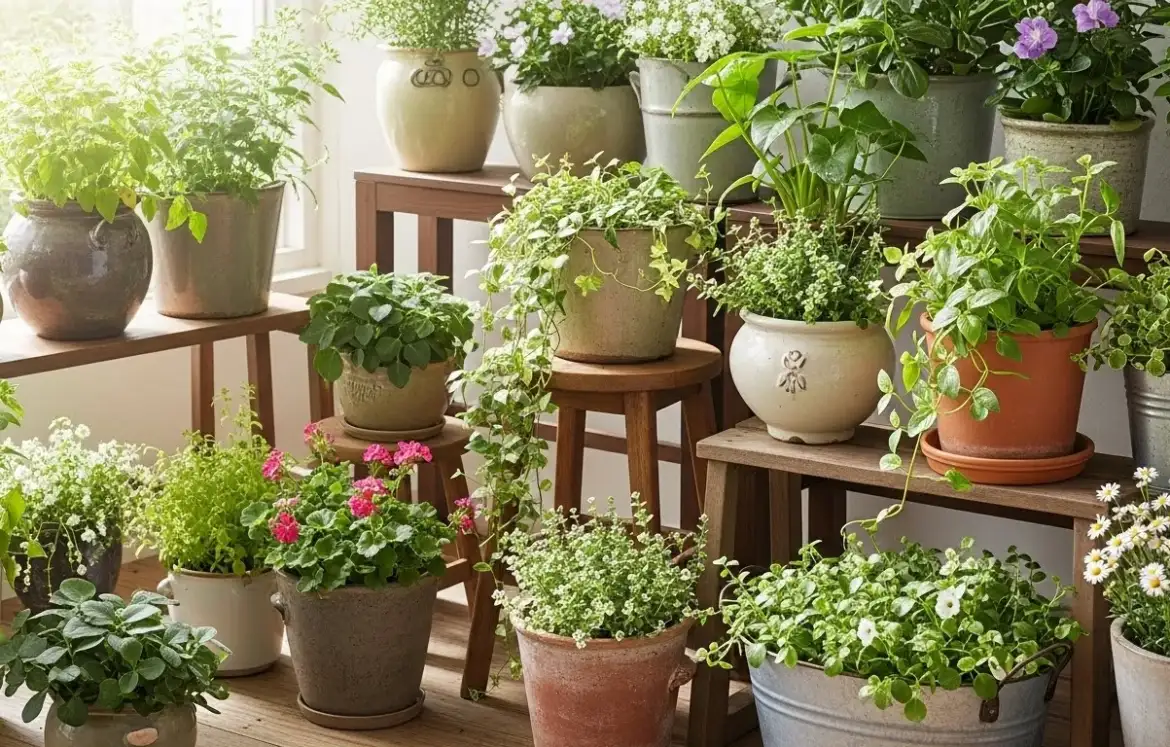
Container gardening offers a simple way to grow plants almost anywhere. You can work with tiny balconies, small yards, or even indoor corners. This guide gives practical ideas that help you arrange plants in creative ways without spending much. Each tip focuses on easy setups, simple tools, and affordable materials you can repurpose at home. Whether you grow herbs, flowers, or vegetables, these ideas help you shape a space that feels lively and inviting.
- Grow Herbs in Repurposed Tin Cans
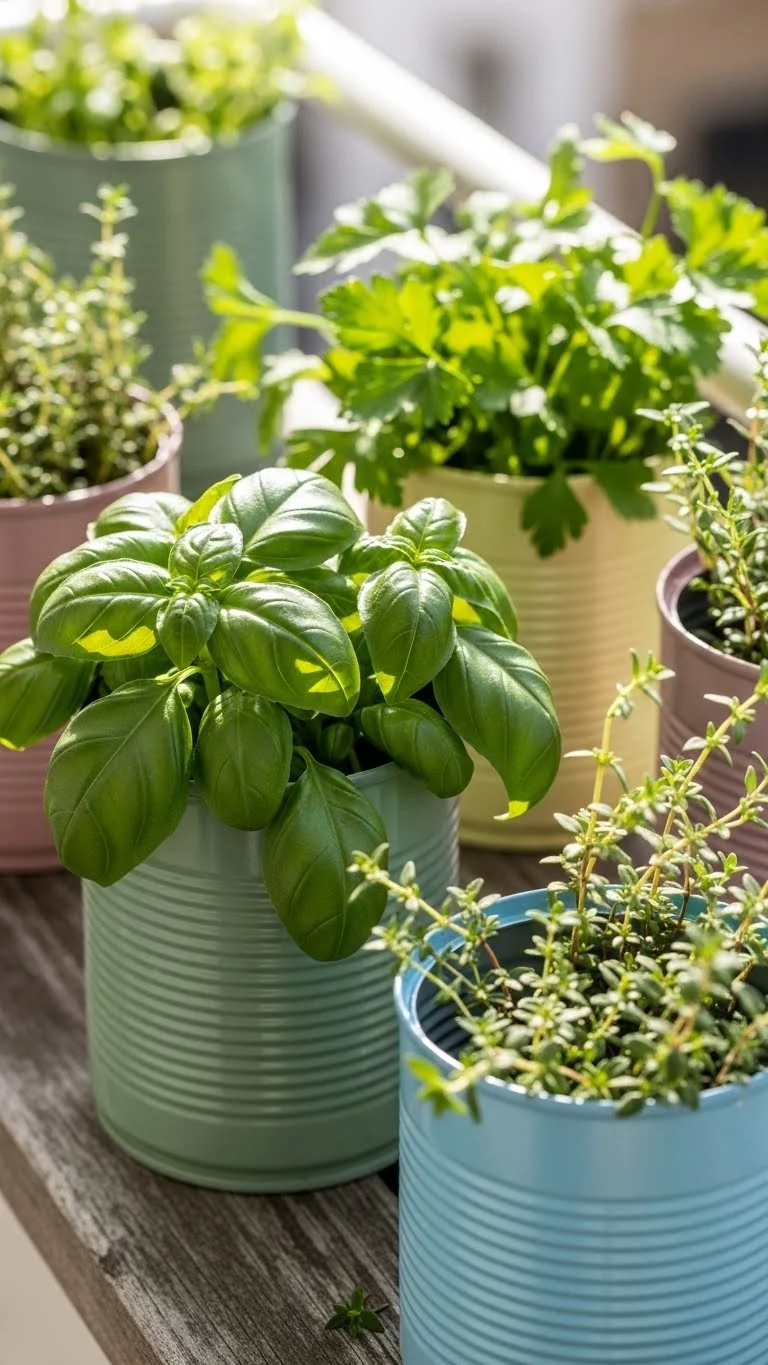
Tin cans make great herb containers. They’re small, light, and easy to decorate. Rinse them well and poke a few drainage holes at the bottom. Add soil and plant simple herbs such as mint, basil, or chives. Set them on a windowsill or balcony ledge where they get soft light. Try grouping three or five cans together for a tidy look. If you prefer a rustic touch, leave the metal exposed. For a cleaner style, use spray paint in muted tones. These cans work well for renters and small spaces because they’re portable. Keep watering light, since cans dry out fast. If the metal heats up in the sun, wrap burlap around the outside. This helps keep the roots cooler. It’s an easy project for anyone who wants herbs without buying fancy pots.
- Use Wooden Crates for Small Vegetable Gardens
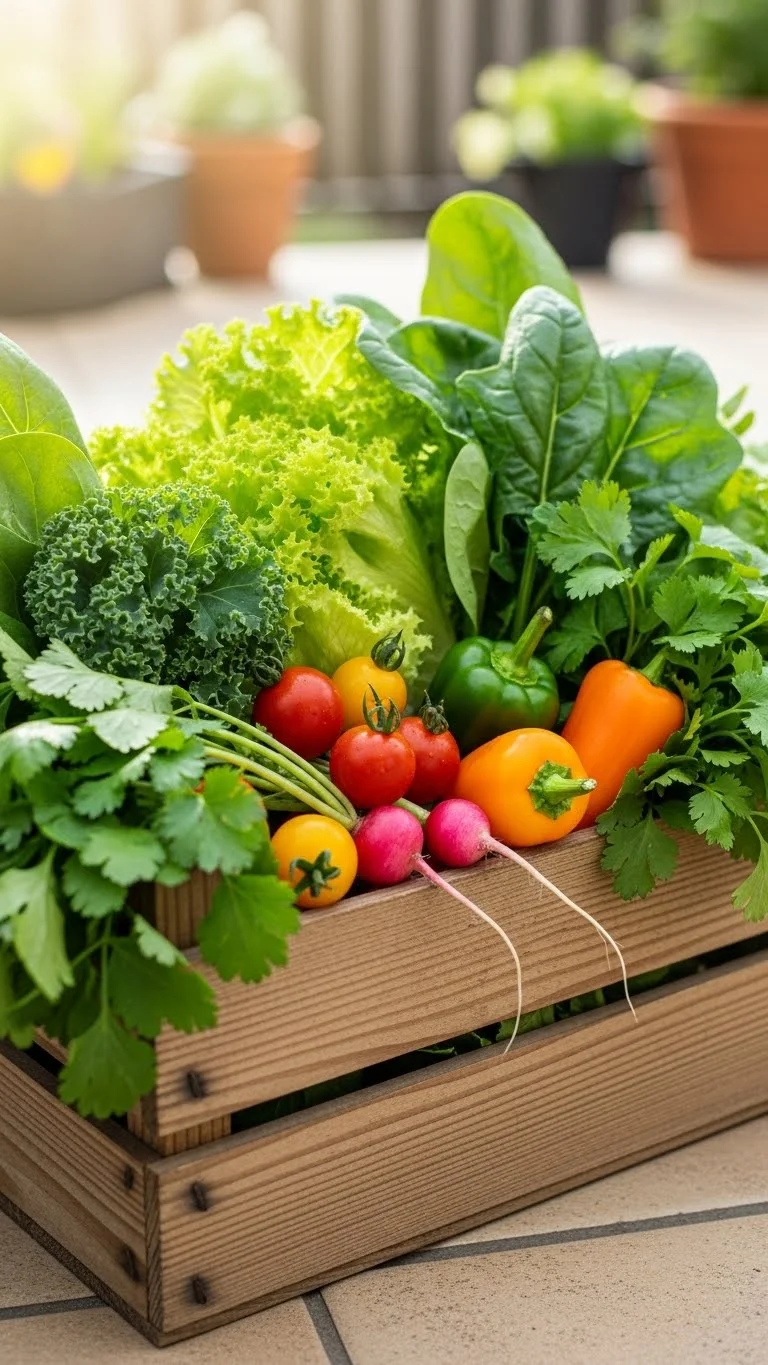
Wooden crates offer a quick way to grow leafy crops. Line the inside with landscape fabric to hold soil. Add a loose mix so roots spread easily. Greens like lettuce or spinach work well because they don’t need deep space. You can place crates on the ground, on stools, or even stack them for a layered display. They add warmth and a simple, homey style to your space. Crates are lightweight, so you can shift them as sunlight changes. Keep the soil slightly damp because crates lose moisture faster than deep pots. If you want extra support, screw two slats together or add small brackets. They’re budget-friendly and easy to find at craft shops or fruit markets.
- Turn Old Buckets into Patio Planters
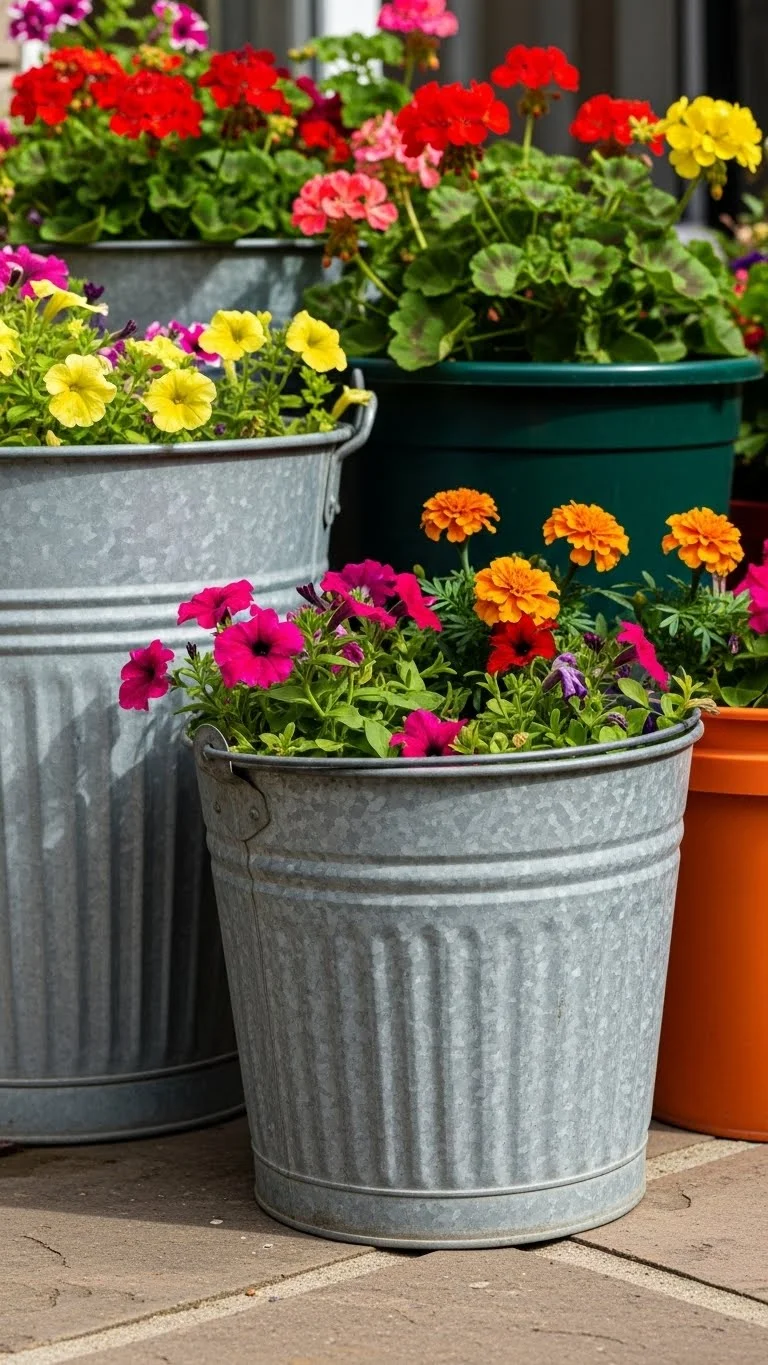
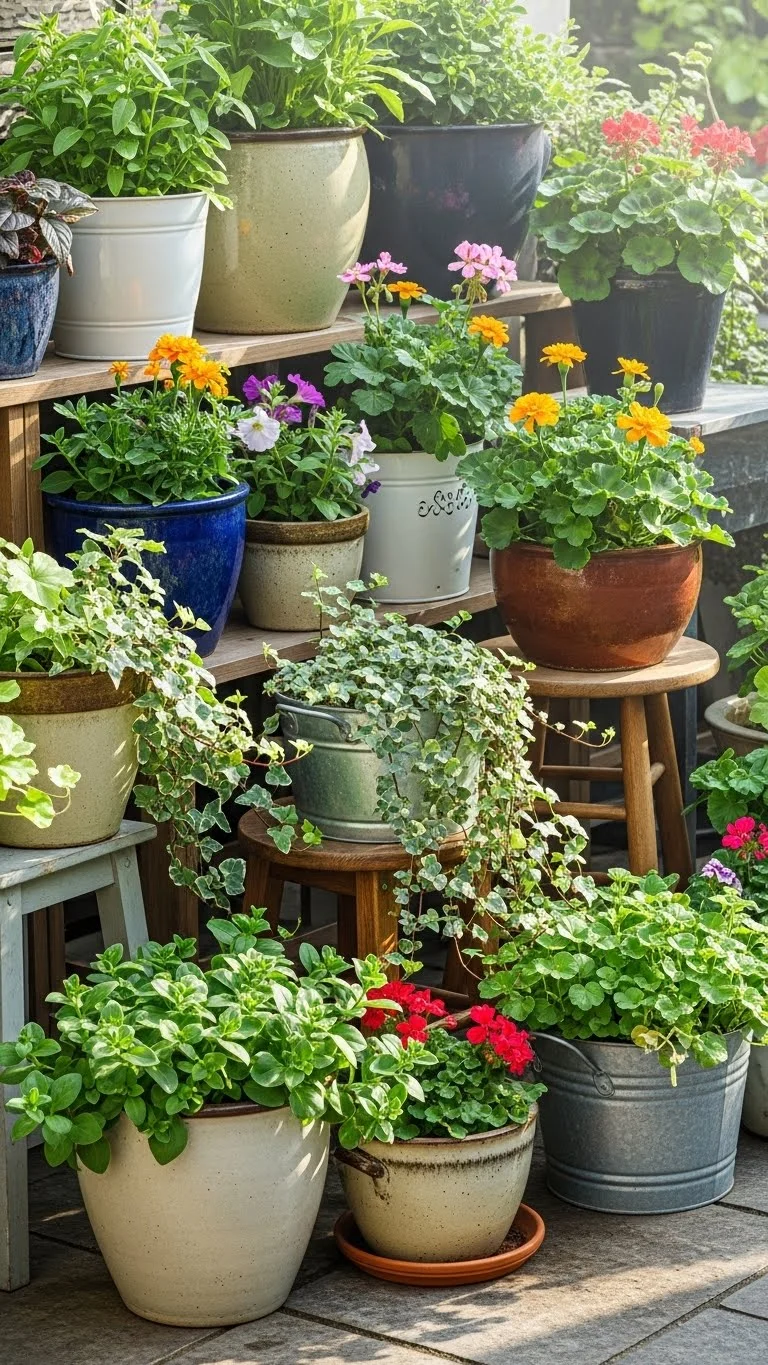
Old buckets hold larger plants without taking up much floor space. Drill holes near the bottom so water drains. Fill with soil and choose flowers or compact shrubs. Buckets add character because each one has its own shape and marks. You can leave them raw or paint them in matching tones for a cleaner look. Because buckets are deep, they handle thirsty plants well. Place them near doorways or corners to brighten the area. If the handles are still attached, move them easily when you want a change. This simple setup works well for gardeners who want something sturdy without buying new pots.
- Create a Tiered Display with Stools
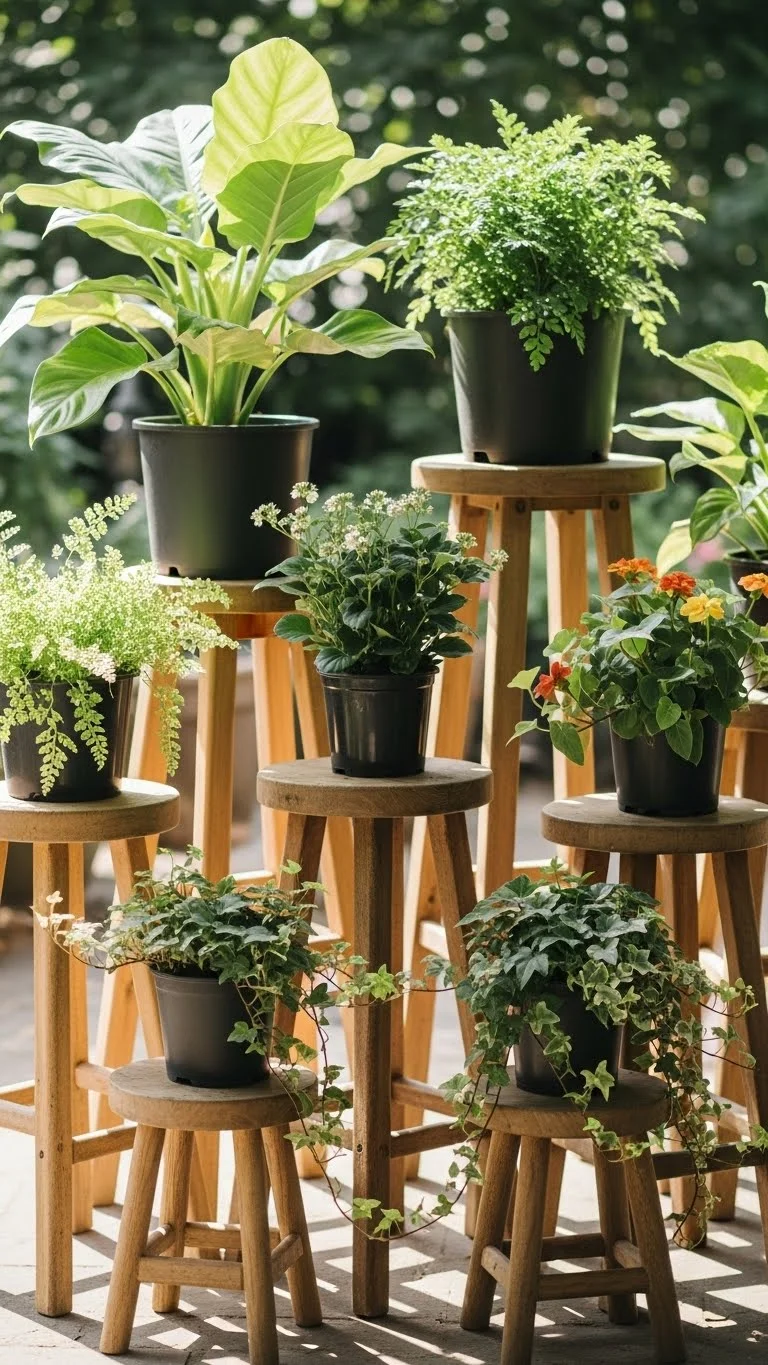
Using stools helps you arrange plants at different heights. It gives your patio or balcony a fuller look without clutter. Use one tall stool, one medium, and one short. Place leafy plants on the tallest stool to anchor the space. Put trailing plants on the lowest for a cascading effect. The middle stool can hold herbs or flowers. You can repaint stools or leave them natural for a rustic look. This layered style draws the eye upward and makes small spaces feel organized. It’s affordable and easy to adjust as your plants grow.
- Hang Small Pots from a Lattice Panel
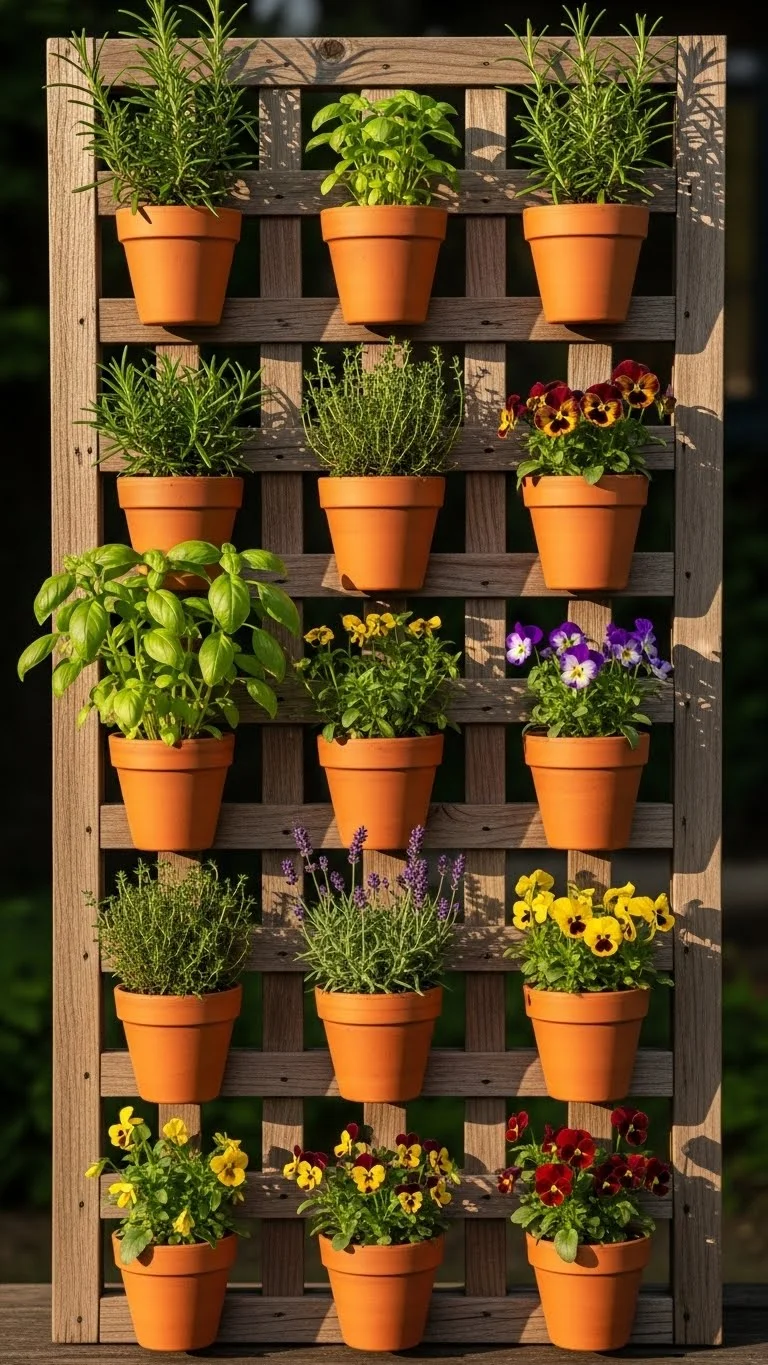
A simple lattice panel turns any bare wall into a planting zone. Attach hooks and hang small terracotta pots. Start with herbs or trailing flowers because they stay light. Space the pots evenly so they don’t crowd. This setup works well for renters because you can lean the panel instead of drilling it into the wall. It saves ground space and brings plants to eye level. Water lightly so the pots don’t drip onto lower rows. It’s an easy way to brighten a dull wall on a budget.
- Use a Rolling Cart for Mobile Gardens
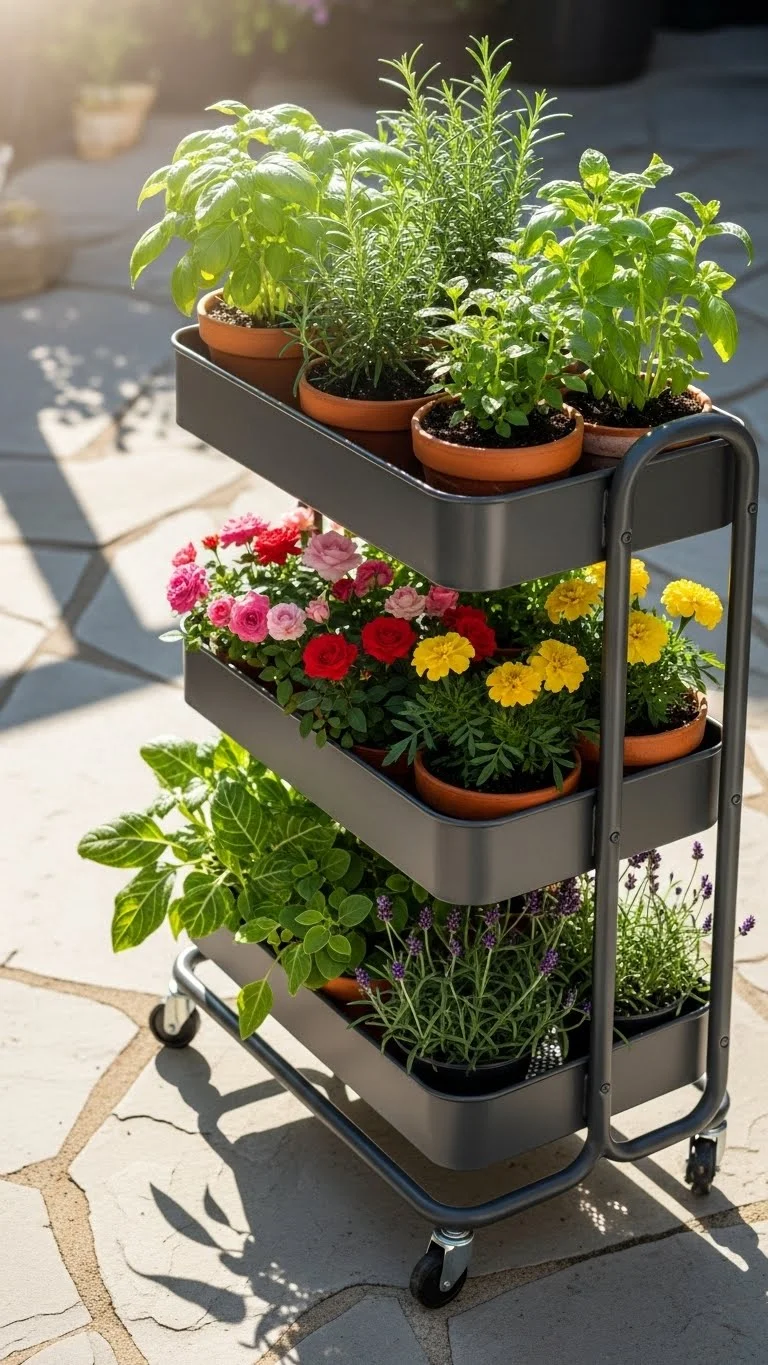
A rolling cart gives you flexibility. You can shift it to catch more or less sunlight. Use each tier for different plant types. Herbs on top, flowers in the middle, and small tools on the bottom. Look for secondhand carts to save money. The wheels make it handy for balconies with changing light patterns. Add small liners to the tiers so water won’t drip. It keeps plants grouped neatly and makes watering easier. When it rains, roll it under a roof to protect delicate leaves.
- Fill Mason Jars with Rooting Plants
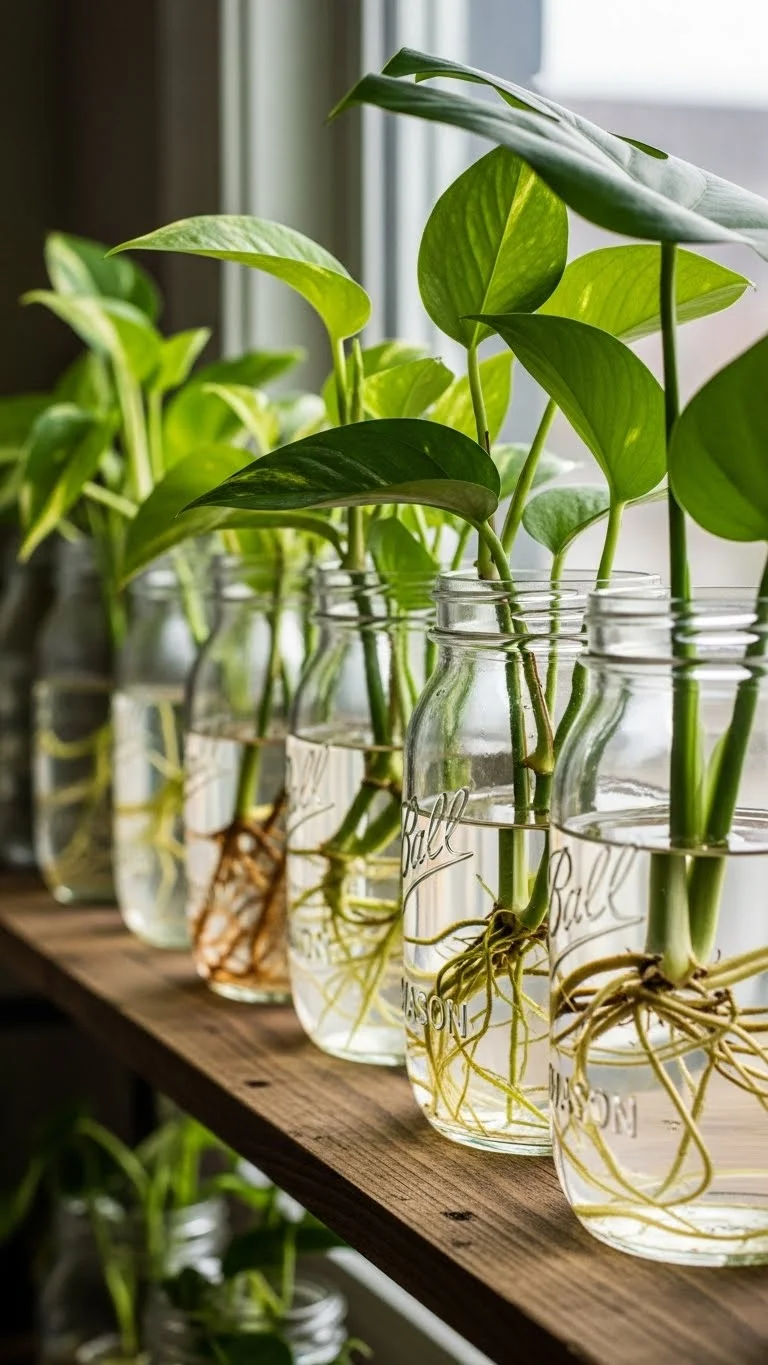
Mason jars work well for rooting cuttings. You can grow pothos, basil, mint, or coleus. Fill jars with clean water and place one cutting in each. Set them near a bright window. Change the water weekly to keep it clear. This is a low-cost way to expand your plant collection. When roots grow long, transfer them to soil. If you like a softer style, wrap twine around the jar rims. You can also group jars in a tray to keep them organized. It’s a simple project that looks pretty.
- Use Fabric Grow Bags for Compact Spaces
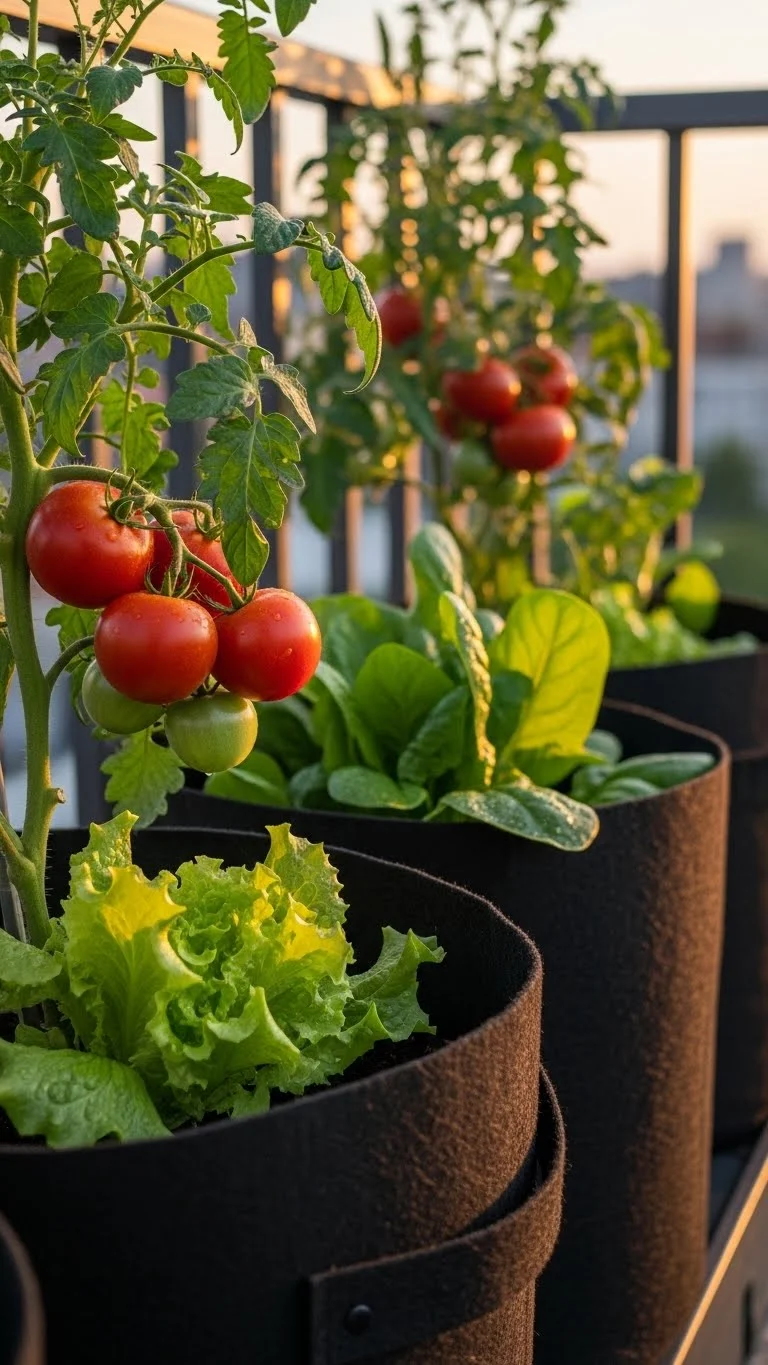
Fabric grow bags help plants breathe. They’re light, foldable, and easy to store. They’re perfect for balconies or rented spaces. Fill them with soil and plant tomatoes, peppers, or greens. Because the fabric allows airflow, roots stay healthy. They dry faster than plastic pots, so water a bit more often. Bags come in many sizes and don’t cost much. Place them on trays to prevent staining the floor. If you move often, these bags make gardening simple.
- Create a Mini Flower Bed in a Drawer
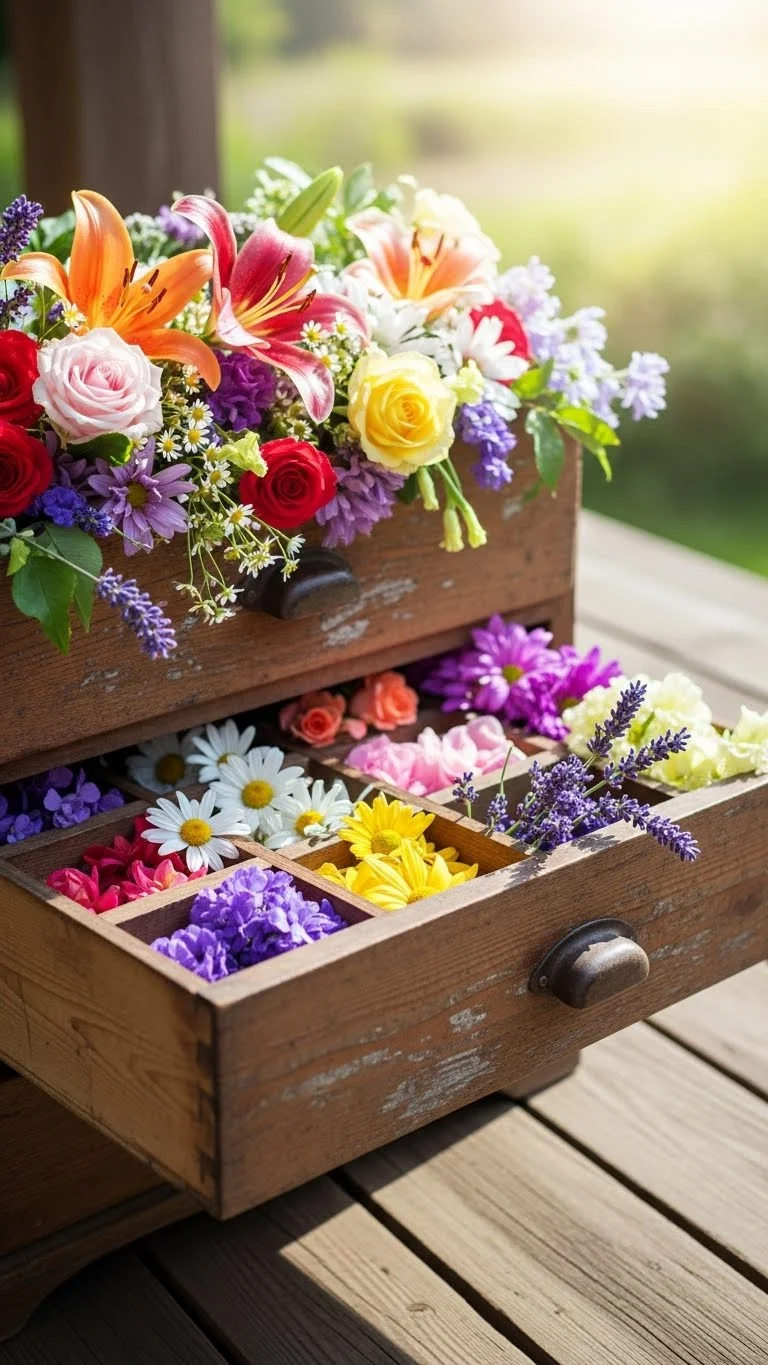
Old drawers make charming planters. Line the bottom with plastic to protect the wood. Add soil and choose low-growing flowers like pansies or marigolds. You can set the drawer on the ground or place it on a bench for height. Drawers create a cozy, handmade look that feels welcoming. If the wood is worn, leave it as is for character. Water carefully so the drawer doesn’t stay soggy. It’s a fun way to reuse furniture headed for the trash.
- Grow Succulents in Shallow Trays
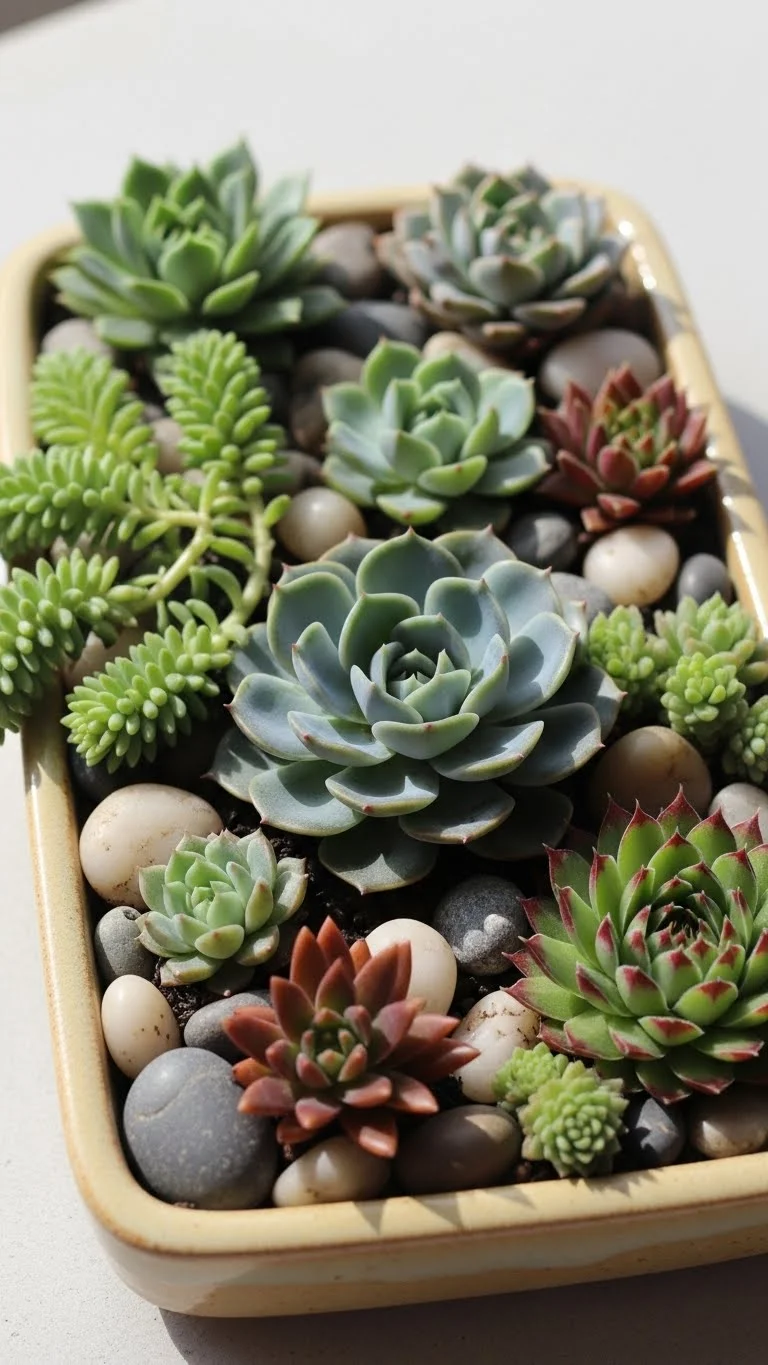
Succulents don’t need deep soil, so shallow trays work well for them. Choose a tray with drainage holes or add a layer of pebbles. Arrange succulents of different shapes for a neat display. Place the tray on a coffee table, outdoor shelf, or step. They need little water, so this setup is low effort. Add small rocks or sand for texture. It’s an easy project for sunny spots and small surfaces.
- Use Hanging Baskets for Trailing Plants
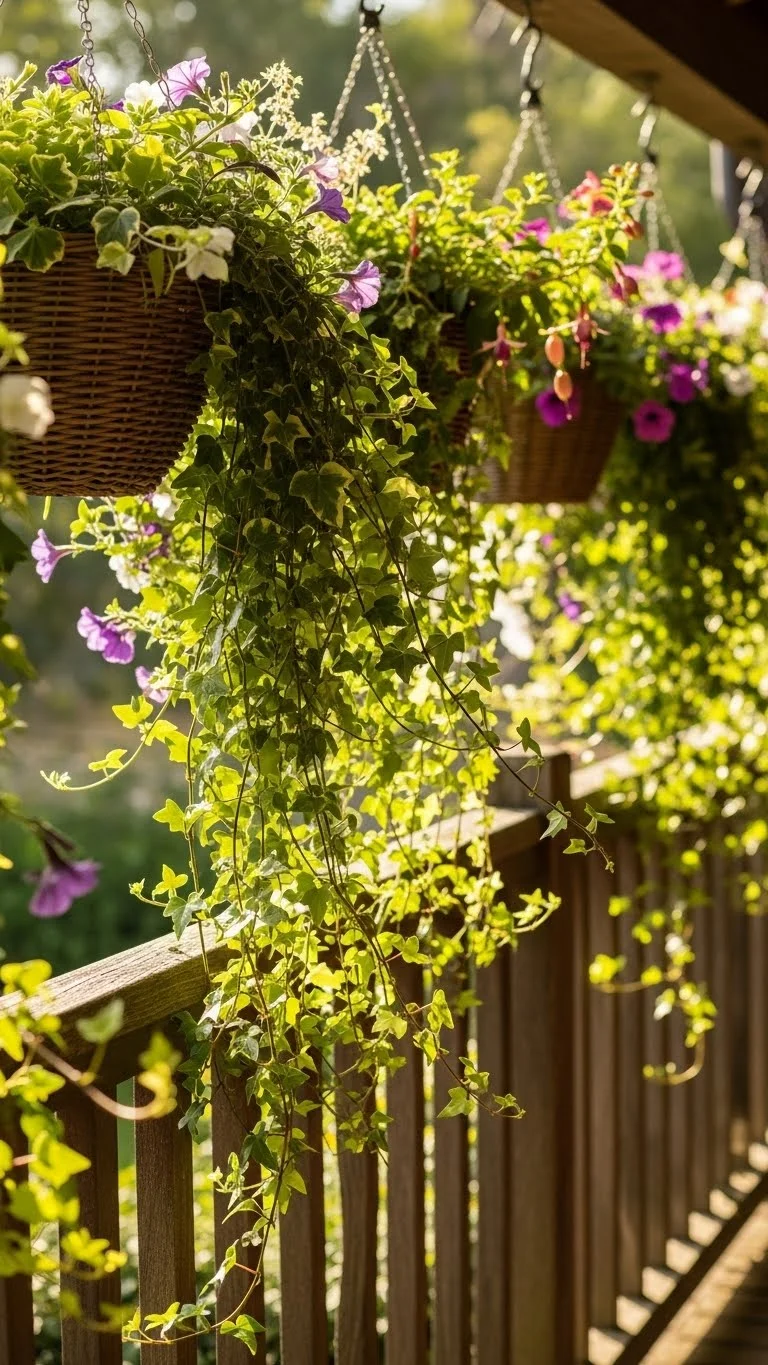
Hanging baskets save ground space. You can grow ivy, petunias, or string-of-pearls. Use lightweight potting mix to avoid strain on hooks. Hang them from sturdy beams or brackets. Water slowly so the soil absorbs evenly. Baskets bring plants to eye level and soften tall spaces. Choose coconut coir liners for a natural look. You can mix flowers and vines for a fuller effect. This simple idea adds charm without taking floor space.
- Stack Terracotta Pots Vertically
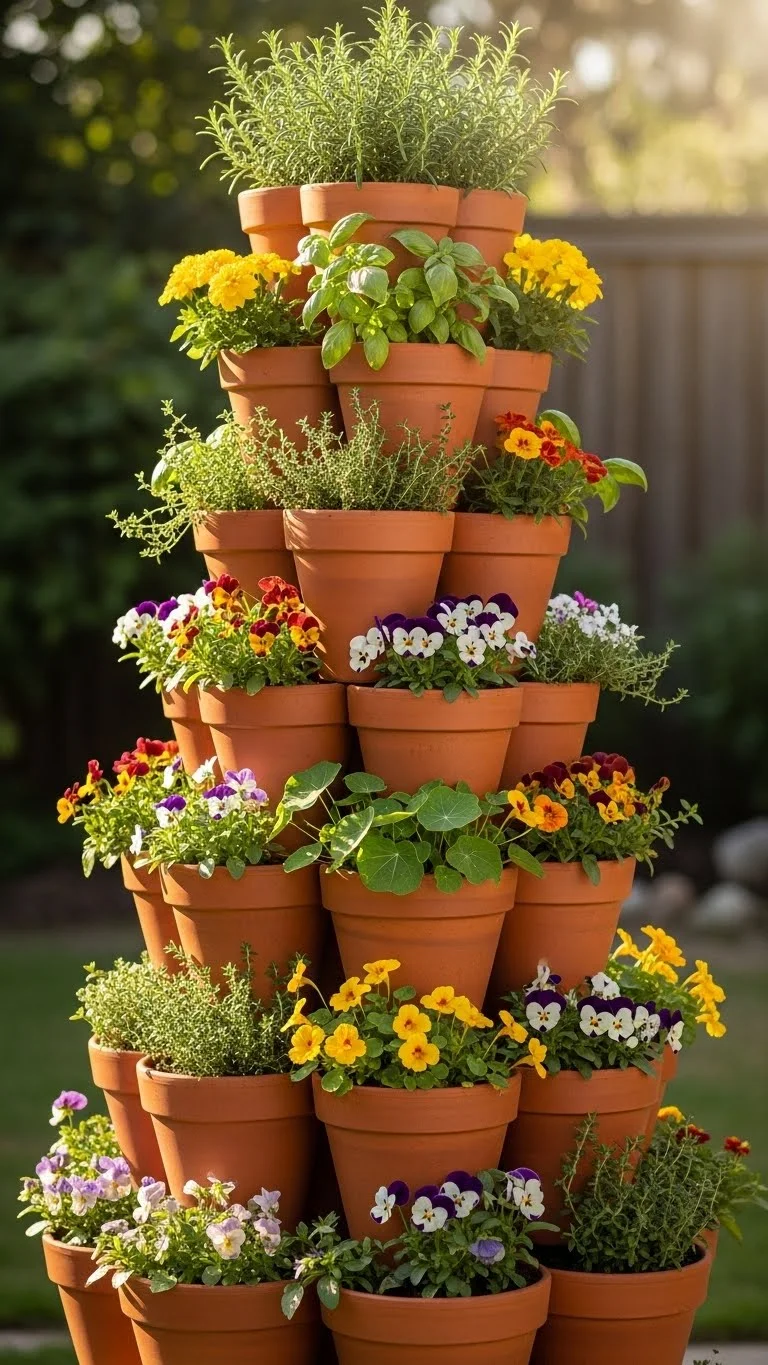
Stacked terracotta pots create height without needing tall planters. Thread a metal rod through the center for stability. Tilt each pot slightly so they look staggered. Plant herbs or flowers in each layer. This gives you vertical interest and saves space. Terracotta is affordable and easy to find. The tower works well by doorways or corners. Keep the soil slightly moist since terracotta dries faster. It’s a creative way to show several plants at once.
- Plant Strawberries in Pocketed Bags
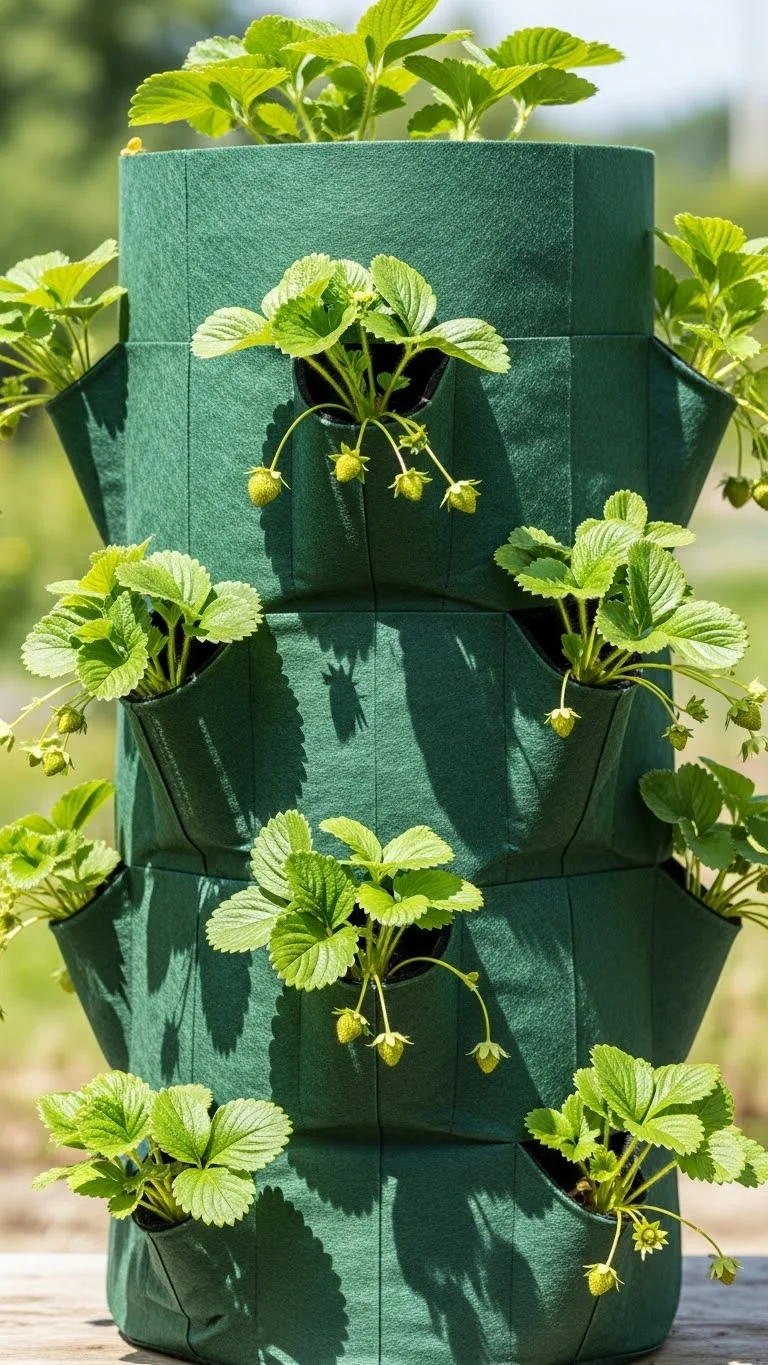
Pocketed grow bags help strawberries spread. Fill the bag slowly and tuck plants into the pockets. Place it where it gets gentle sun. Water from the top so moisture travels down. The pockets make it easy to harvest berries at different heights. You can hang the bag or set it near a fence. This idea works well for small patios and avoids messy ground patches.
- Use Metal Tins for Indoor Plants
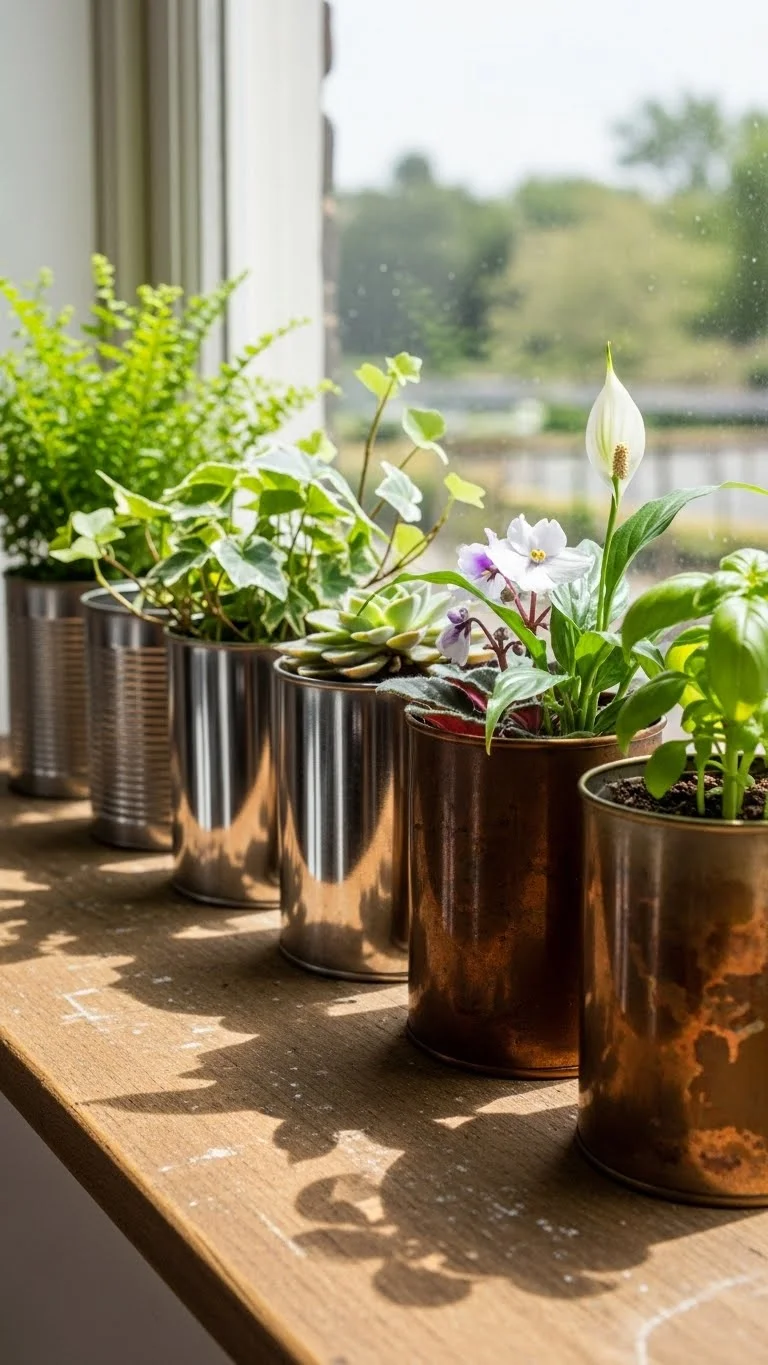
Metal tins add style without much work. They fit small indoor plants like pothos, herbs, or peperomia. Add drainage holes and a small saucer underneath. Tins reflect light, making windowsills feel brighter. If the metal gets too warm, wrap twine or cloth around the outside. They’re easy to repurpose from pantry items. You can group tins to create a cozy indoor garden.
- Convert a Birdcage into a Hanging Display
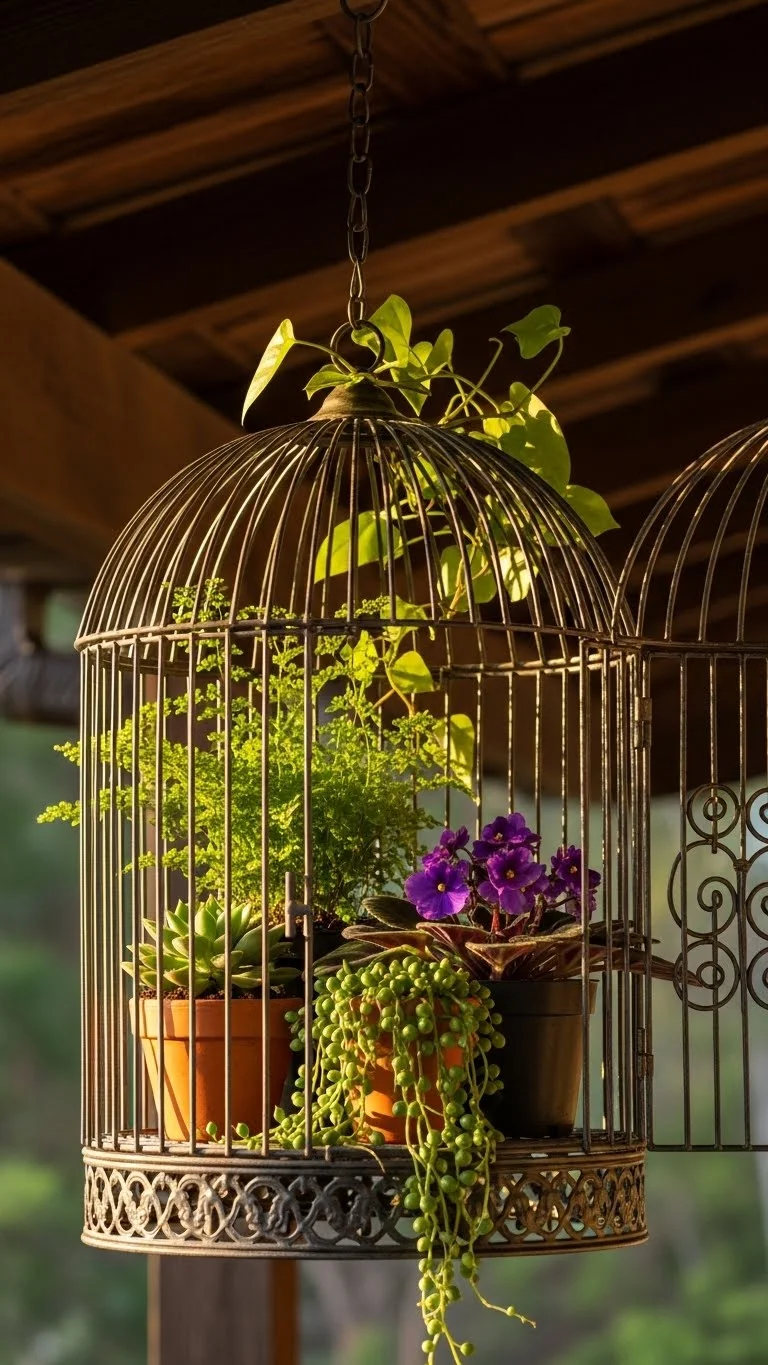
A birdcage makes a charming planter. Place small pots inside instead of filling it with soil. Hang it from a porch beam or tree branch. Trailing plants look lovely as they spill through the bars. You can paint the cage or keep its natural patina. It turns a simple corner into a focal point. It works best for shade-loving plants because cages don’t hold large soil amounts.
- Use a Toolbox for Low-Growing Herbs
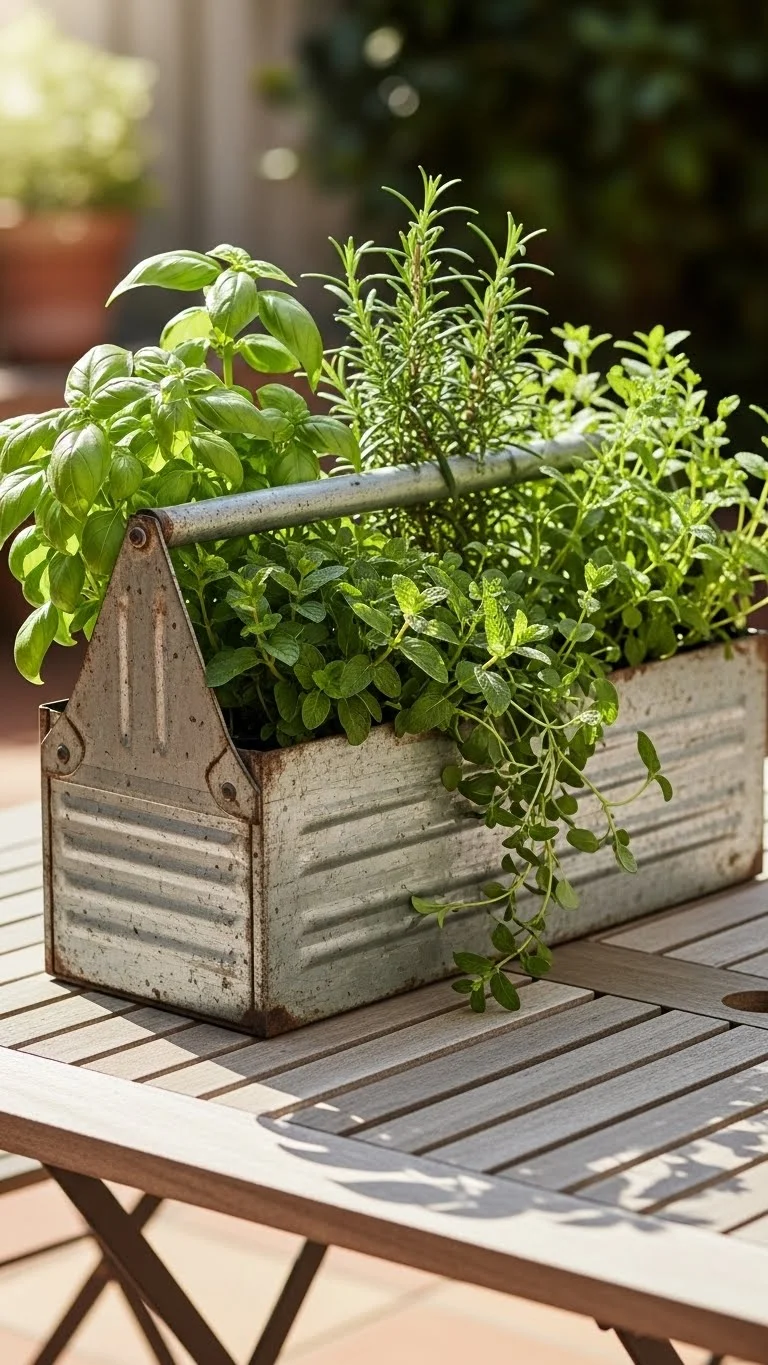
A toolbox is sturdy and deep enough for herbs. Line it with plastic and add soil. Plant rosemary, thyme, or oregano. Keep the lid open and use the handle as decoration. Toolboxes look great on picnic tables or outdoor shelves. They hold moisture longer than buckets and suit rustic styles. This is a cheap and fast project for anyone who likes unusual containers.
- Grow Flowers in a Hollow Log
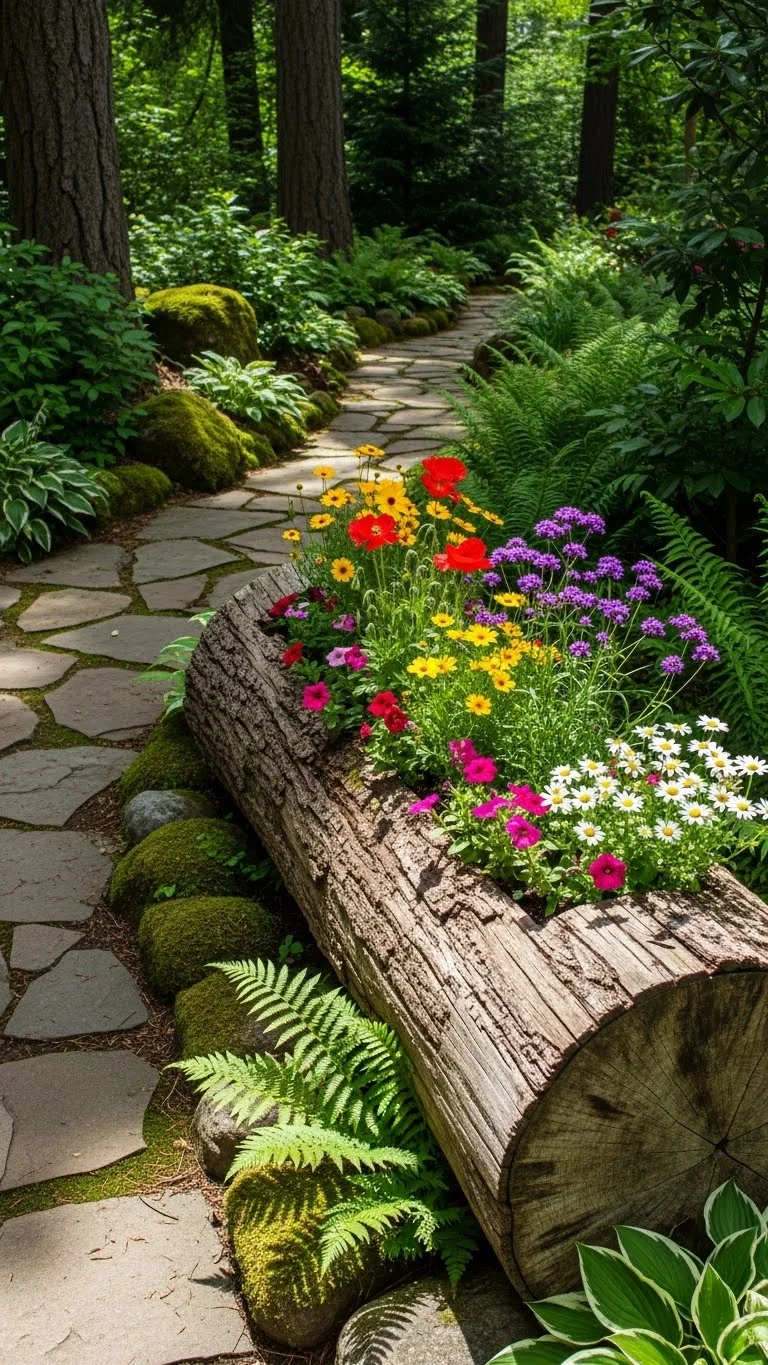
A hollow log creates a natural planter. Scoop out the center, fill it with soil, and add flowers or ferns. Logs stay moist longer and blend easily into garden areas. They work well in shady corners or along walkways. Logs can be found for free after trimming trees. Because they’re heavy, place them where you want them before filling. This idea adds warmth and texture to outdoor spaces.
- Arrange Plants in Woven Baskets
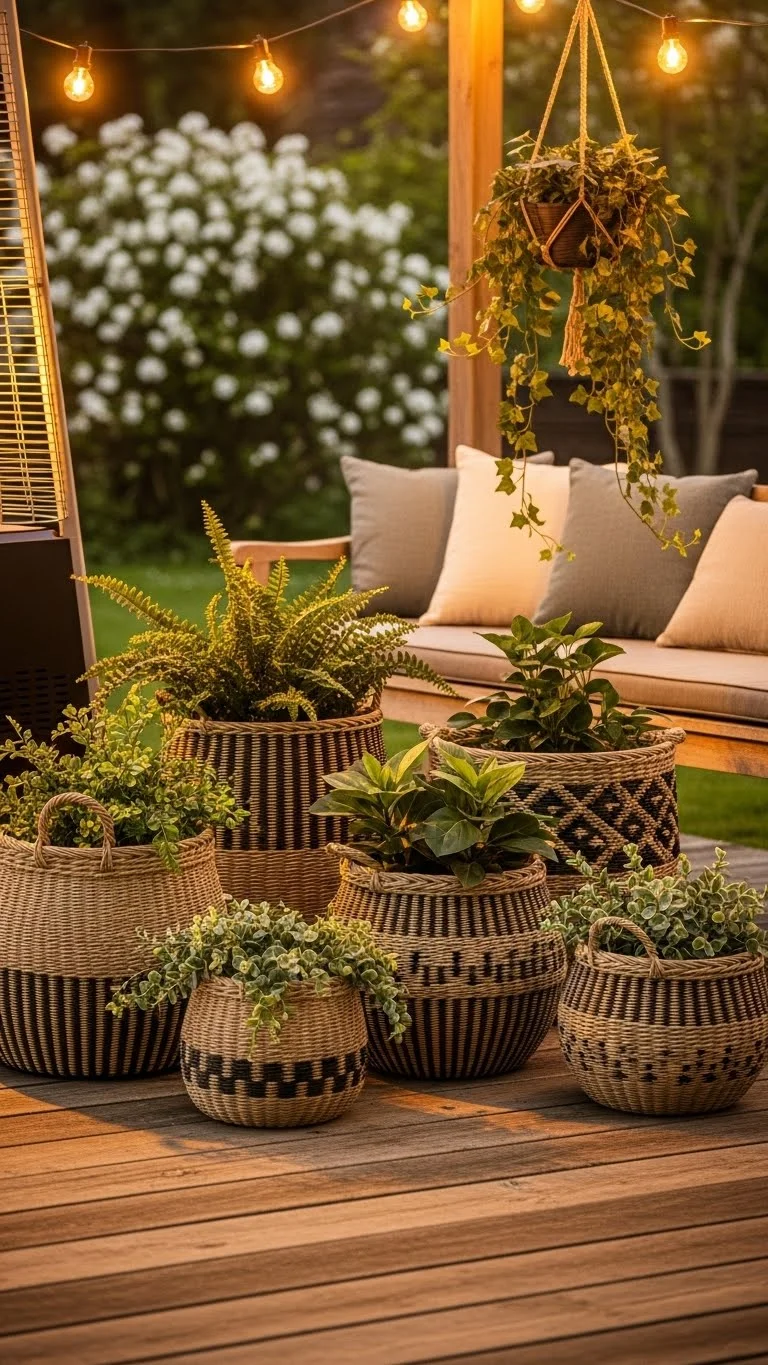
Woven baskets soften any space. They’re light and easy to move. Line them with plastic bags to keep soil in place. Add potted plants inside so you can remove them when watering. Baskets look great with leafy indoor plants or soft outdoor flowers. They bring a warm feel to porches or living rooms. Keep them out of constant rain so they last longer.
- Grow Leafy Greens in Plastic Storage Tubs
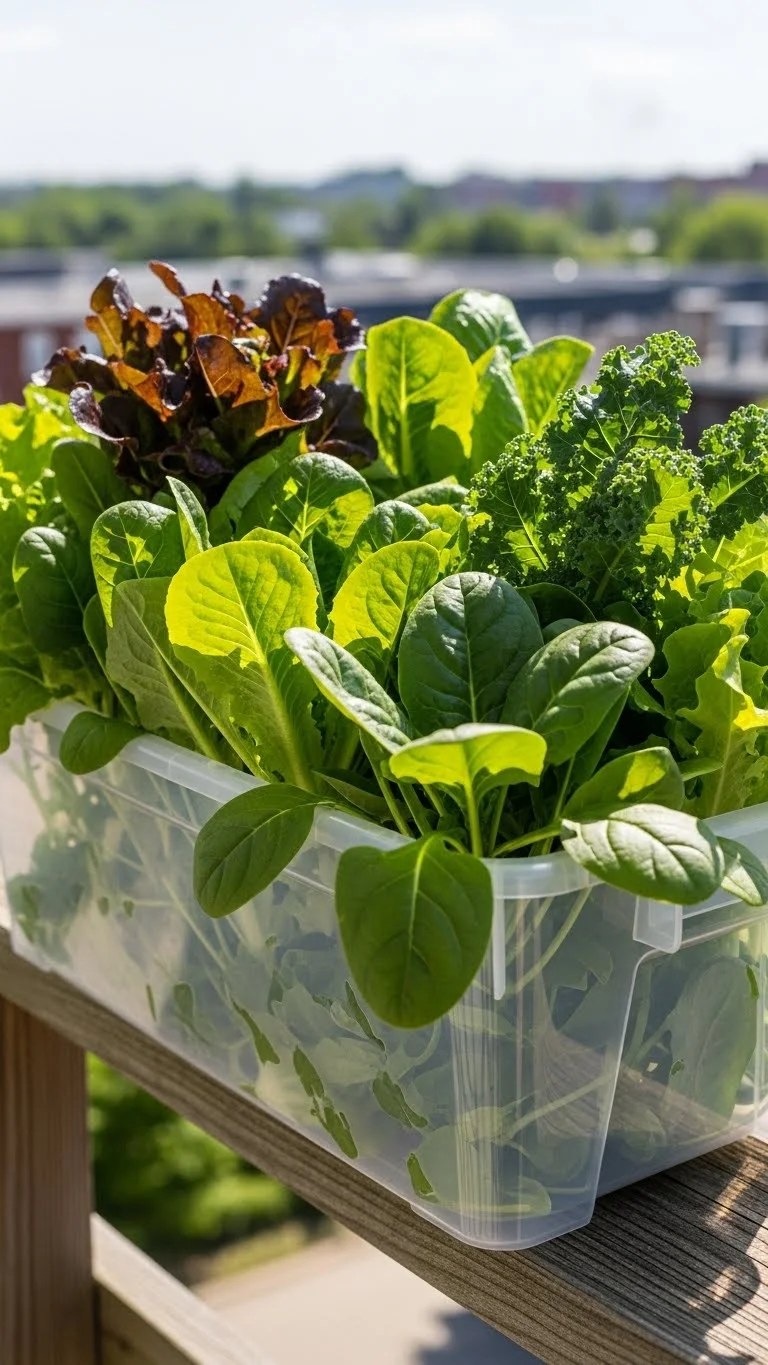
Plastic tubs hold plenty of soil and don’t cost much. Drill holes in the bottom and fill them with a loose mix. They’re ideal for lettuce, kale, or spinach. Put them on wooden blocks or crates for airflow. Because tubs are wide, you can grow lots of greens in one container. Keep watering light but frequent. This simple idea works well for beginners.
- Use Hanging Test Tubes for Propagation
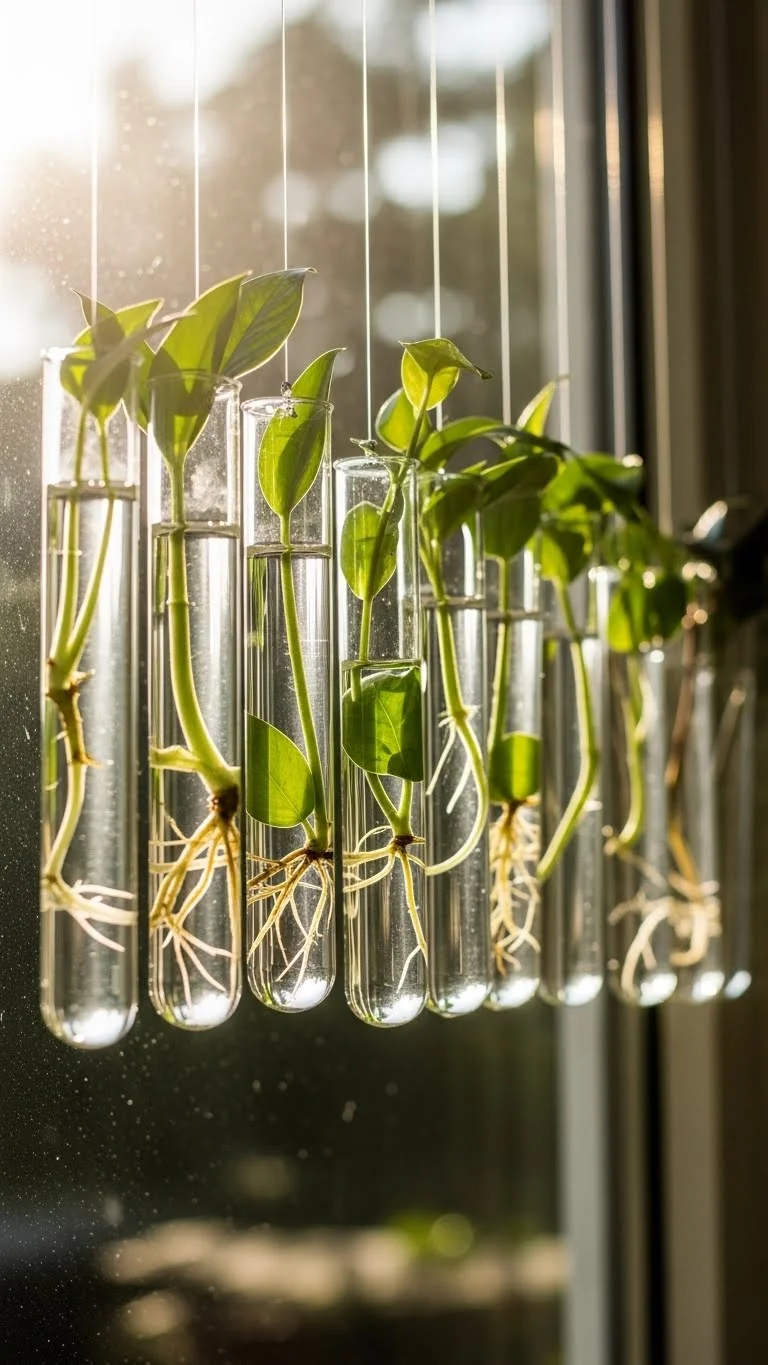
Test tubes make propagation fun. Place one cutting in each tube and hang them in a row. They catch natural light and show off the roots as they grow. This works well for plants like pothos or philodendron. Replace the water every few days. You can hang them with twine or place them on a small rack. It’s a low-cost way to grow new plants.
- Turn a Colander into a Drain-Friendly Planter
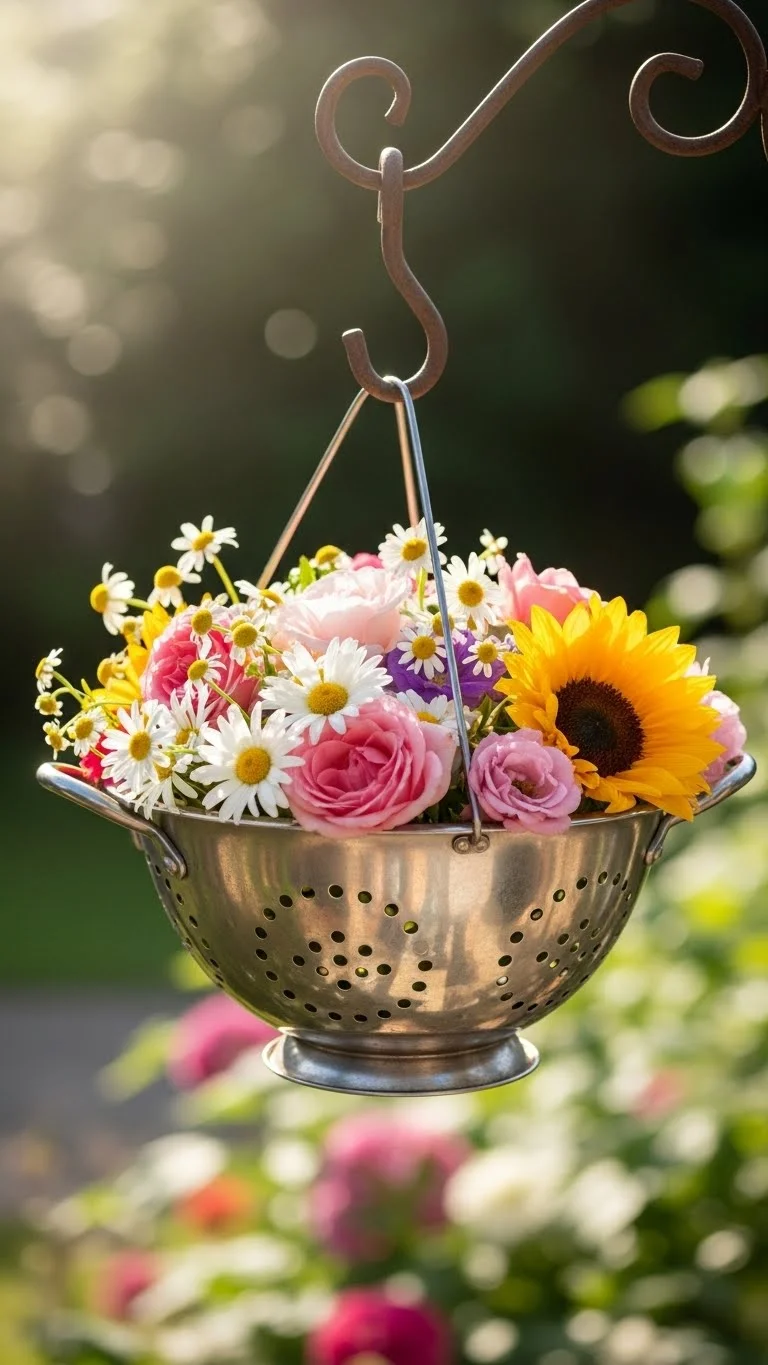
A colander gives instant drainage. Line it lightly with moss or fabric, then add soil. Plant hardy flowers or herbs. Hang it using the side handles or place it on a table. Water flows easily, so plants stay healthy. Colanders add charm and come in many colors. You can find them cheap at thrift shops.
- Fill Wine Boxes with Mixed Plants
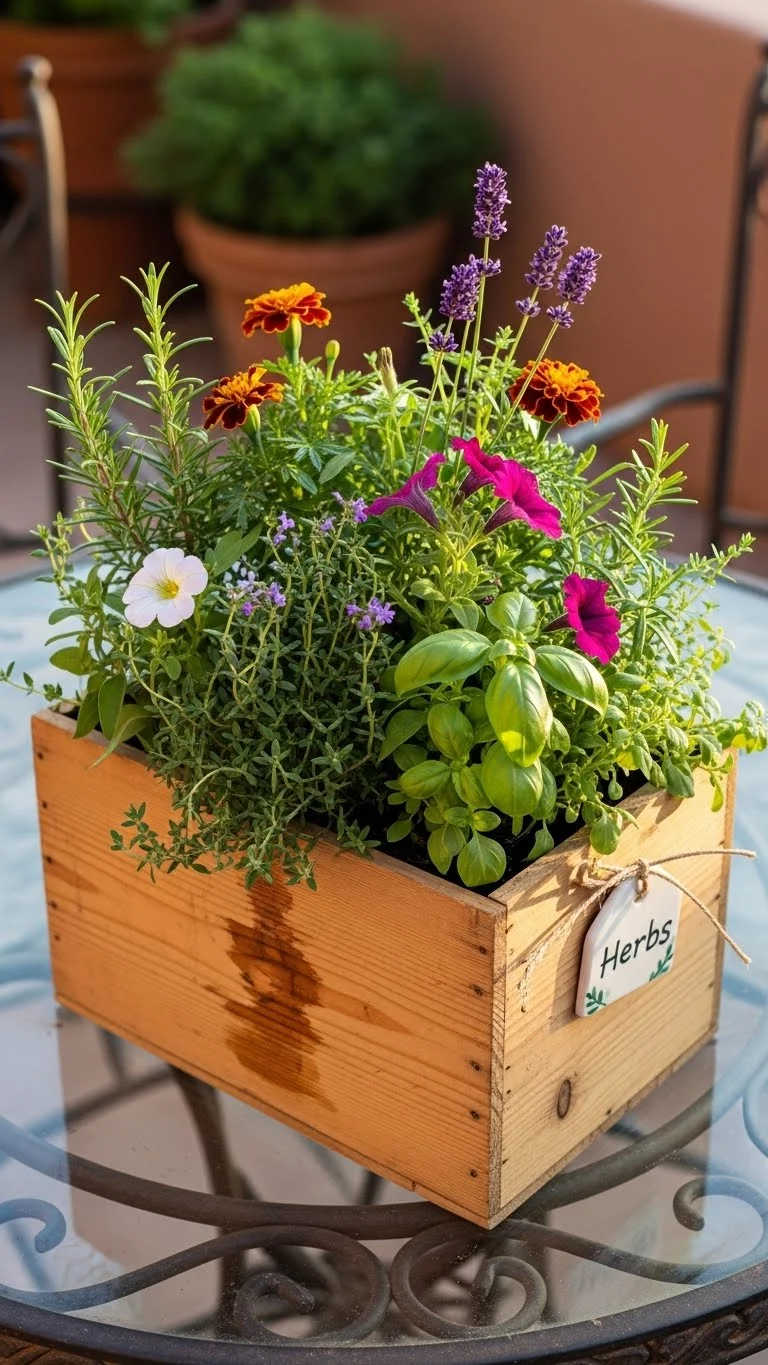
Wine boxes offer a long, shallow space for mixed plantings. Add a plastic liner and soil. Combine flowers with herbs for a pretty blend. These boxes look great on balconies or porches. Because they’re lightweight, you can move them often. Keep watering light so the wood stays dry. Wine shops often give them away for free.
- Create a Shelf Garden Indoors
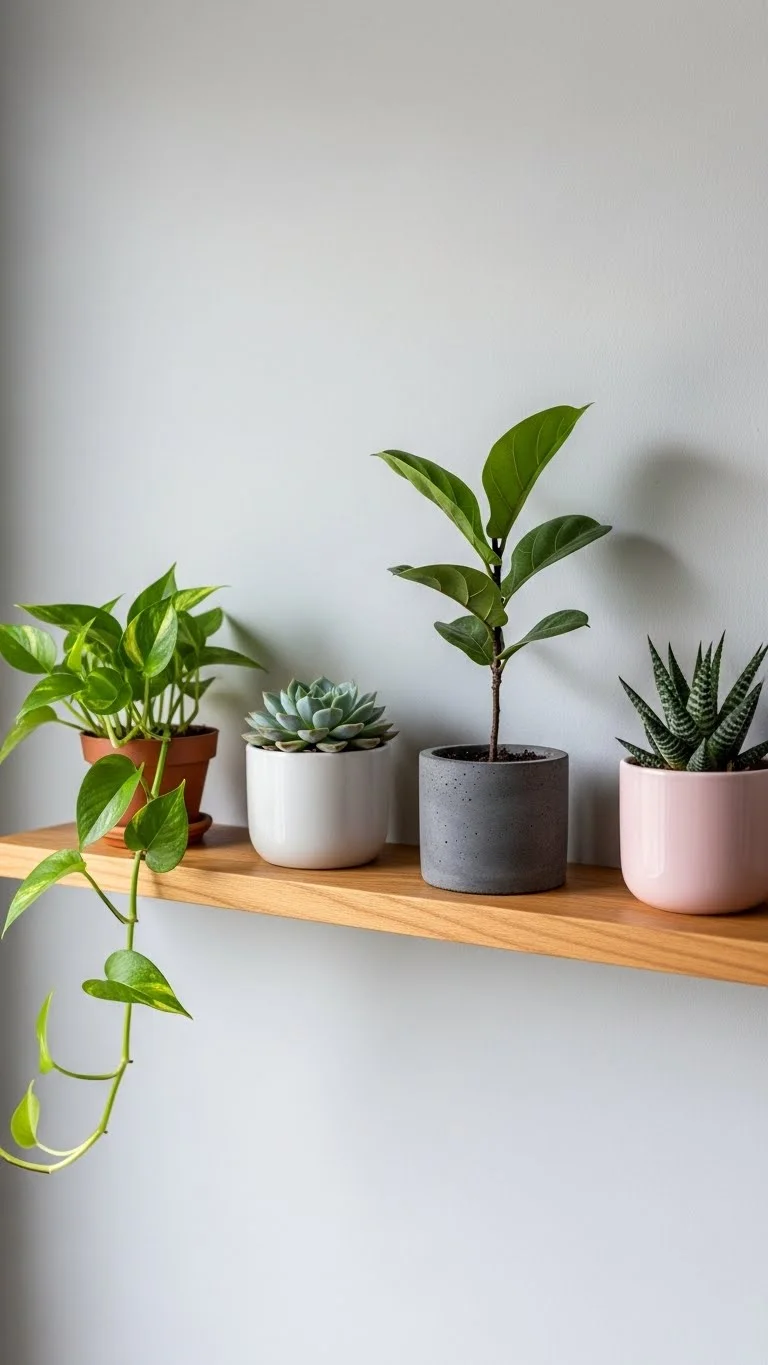
A simple shelf becomes a mini indoor garden. Choose small pots that fit neatly. Place plants that enjoy bright light. Mix textures—ferns, trailing vines, small succulents. Shelves keep things tidy and save floor space. You can start with one shelf and expand later. It’s an easy project for renters and small rooms.
- Grow Tomatoes in Large Paint Buckets
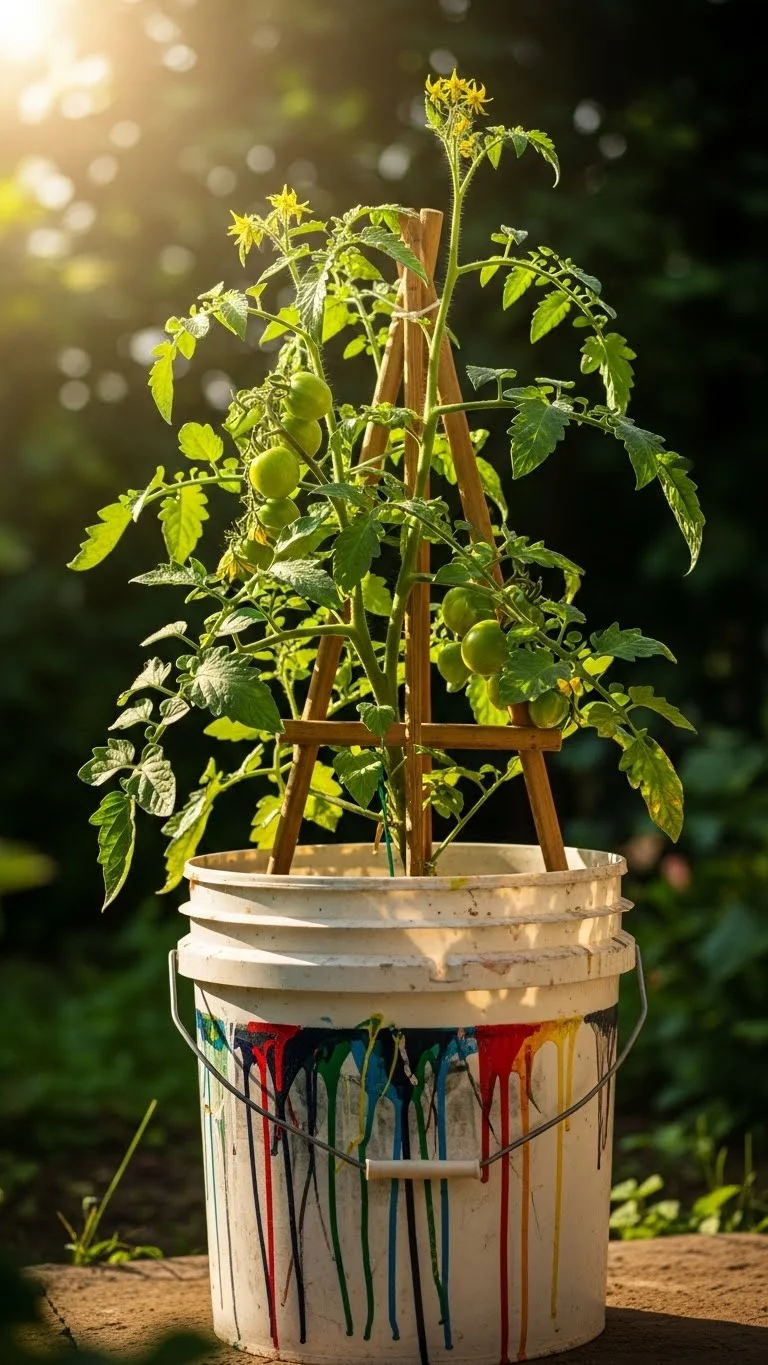
Paint buckets are perfect for deep-rooted plants. Wash them well, then drill drainage holes. Add soil and a small trellis for support. Place the bucket near strong light. Tomatoes grow well with steady watering. Buckets don’t cost much and last years. You can label them or paint them for style.
- Use a Ladder Shelf for Vertical Plants
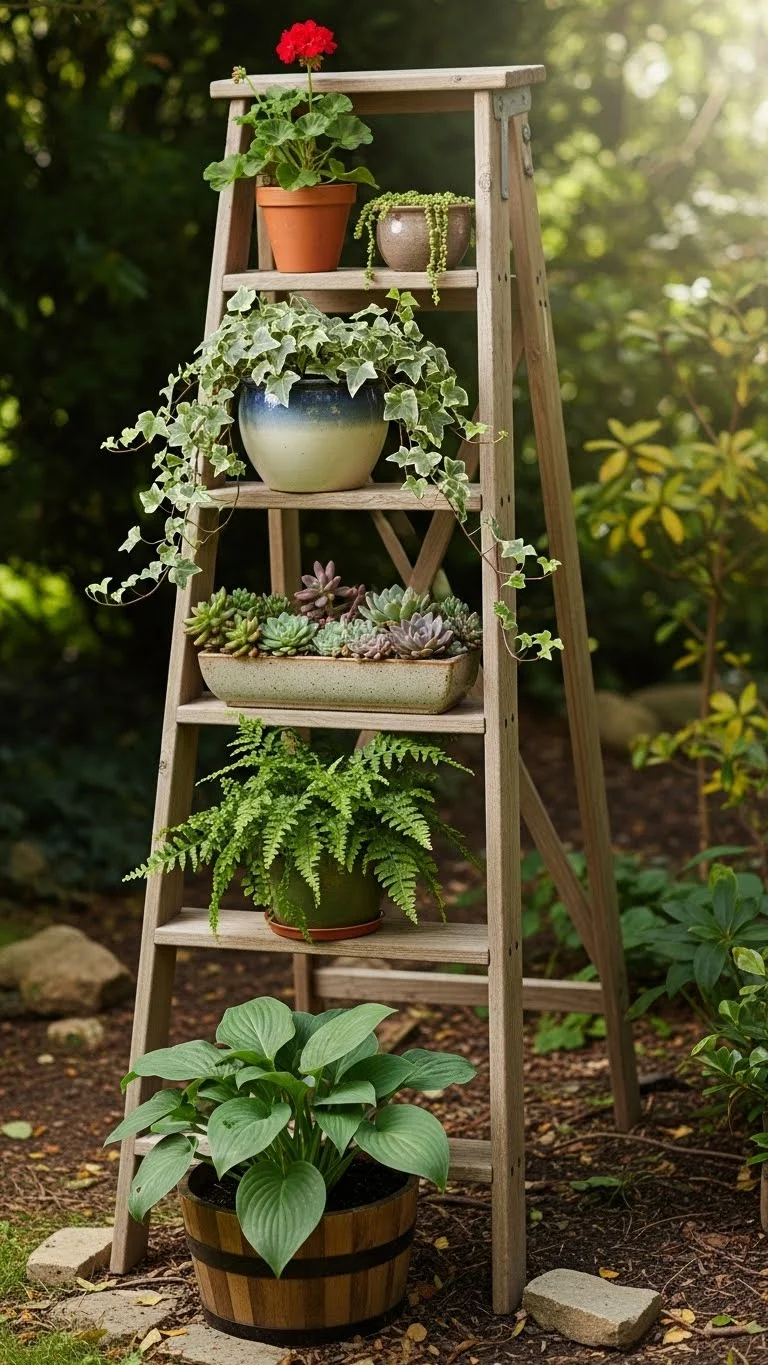
A ladder shelf gives you vertical planting space. Place one pot on each step. Trailing plants work well on the top steps, and fuller plants fit lower. This setup fits well on balconies or patios. You can repaint the ladder or leave it worn. It keeps plants organized and easy to reach.
- Create a Fairy Garden in a Wide Bowl
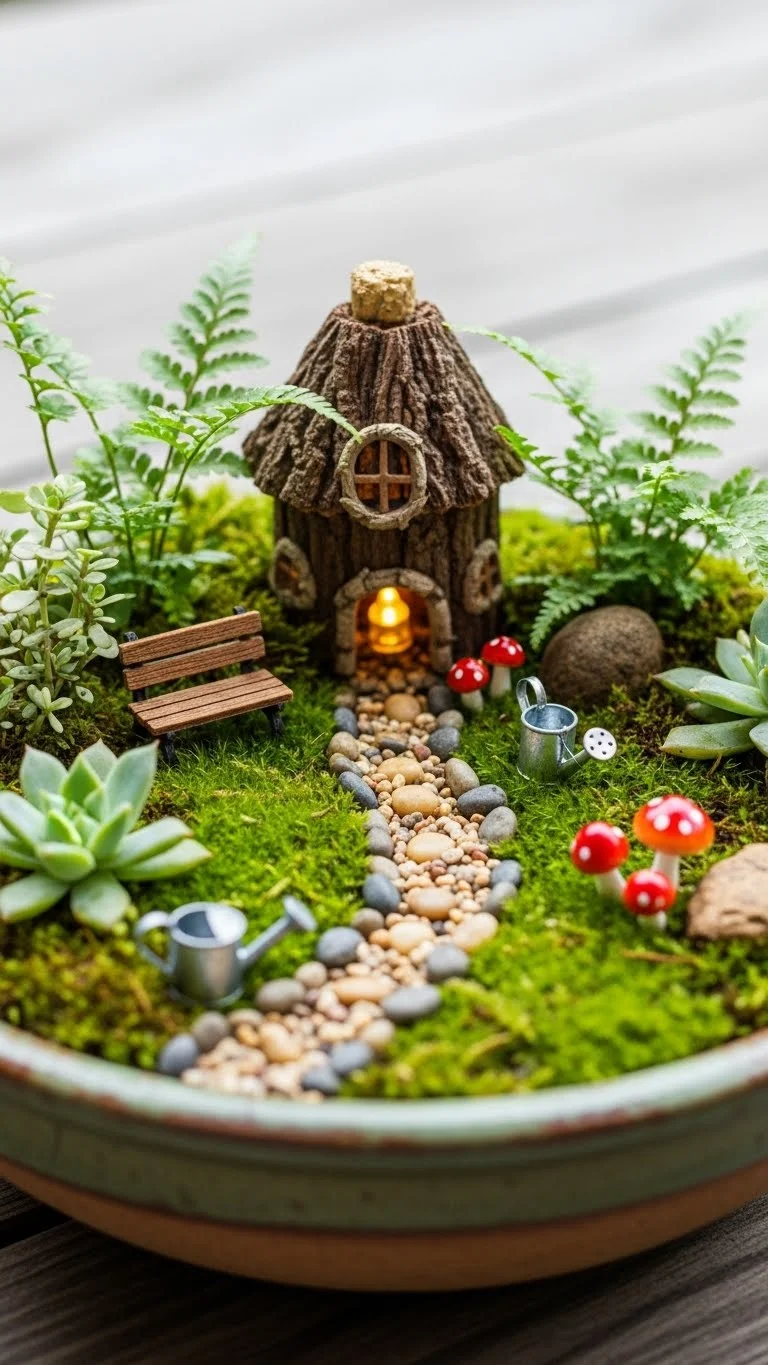
A wide bowl makes a great fairy garden. Use small plants, pebbles, and moss. Arrange tiny paths and figures if you like. It’s a small, charming project for any table. Bowls don’t need much soil, so water lightly. This fits well indoors or outdoors. It’s fun for kids and adults who like creative plant setups.
Conclusion
Container gardening opens opportunities in small or large spaces. You can use simple items you already have, mix materials, and shape displays that fit your style. These ideas make gardening practical, affordable, and fun. Try one or several and build a space that feels full of life.
